
Publicaciones – Artículos
Tiempo de lectura: 2 minutos
“Jewel of Tenochtitlan, Templo Mayor”. Revista National Geographic History, Marzo-Abril, 2024: 74-89.
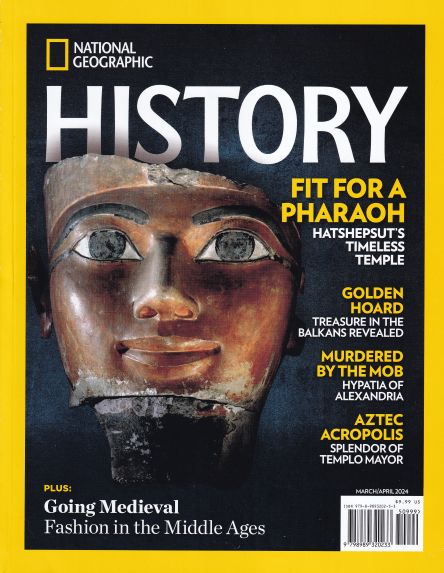
For centuries, archaeologists searched in vain for Templo Mayor, which they knew existed somewhere beneath modern-day Mexico City. Once rising some 160 feet above the Aztec (or Mexica, as the Aztec referred to themselves) ceremonial center of Tenochtitlan, the ancient capital of the Aztec Empire, the pyramid served as the religious focal point and, some say, the center of the Aztec universe. But then Hernán Cortés, head of a joint force of Spanish troops and hundreds of thousands of Indigenous allies, conquered the city in 1521, badly damaging the pyramid. Over time, it gradually disappeared.
Maps and chronicles indicated that Templo Mayor lay beneath Mexico City Metropolitan Cathedral. Once in a while, when work was carried out in the city’s subsoil, objects related to Templo Mayor would appear. In 1790 a large statue of the goddess Coatlicue and a 24-ton monolith, called the sun stone or Aztec calendar, were found. In 1914 an archaeologist uncarthed more remains that he linked to Templo Mayor…
…The original Templo Mayor was a simple thatched shrine, built during the reign of Itzcoatl (r. 1427-1440). Subsequent leaders ordered its enlargement to commemorate their military victories (or sometimes as the result of flooding or other environmental problems). Excavations have confirmed at least seven expansions….